Identify Body Shape: A Clear, Confident Guide to Understanding Your Natural Silhouette
Every woman carries a unique silhouette, and understanding it is the first step to dressing with confidence and clarity. When you can accurately identify body shape, choosing flattering outfits becomes much easier. Your wardrobe works smarter, your proportions look more balanced, and every look feels more intentional. This guide breaks down the process in a simple, visual, and practical way to help you recognise your natural outline without stress.
Why Identifying Your Body Shape Matters More Than You Think
Understanding your shape isn’t about labelling your body — it’s about learning how your proportions work together. Once you identify body shape correctly, outfits complement your frame instead of competing with it. Proportions become easier to balance, your shopping choices improve instantly, and styling becomes less about guessing and more about intention.
Recognising your silhouette also helps reduce the frustration of trying clothes that don’t drape well simply because they’re not suited to your natural structure. It’s not about size — it’s about proportion.
Step 1: Take the Four Key Measurements
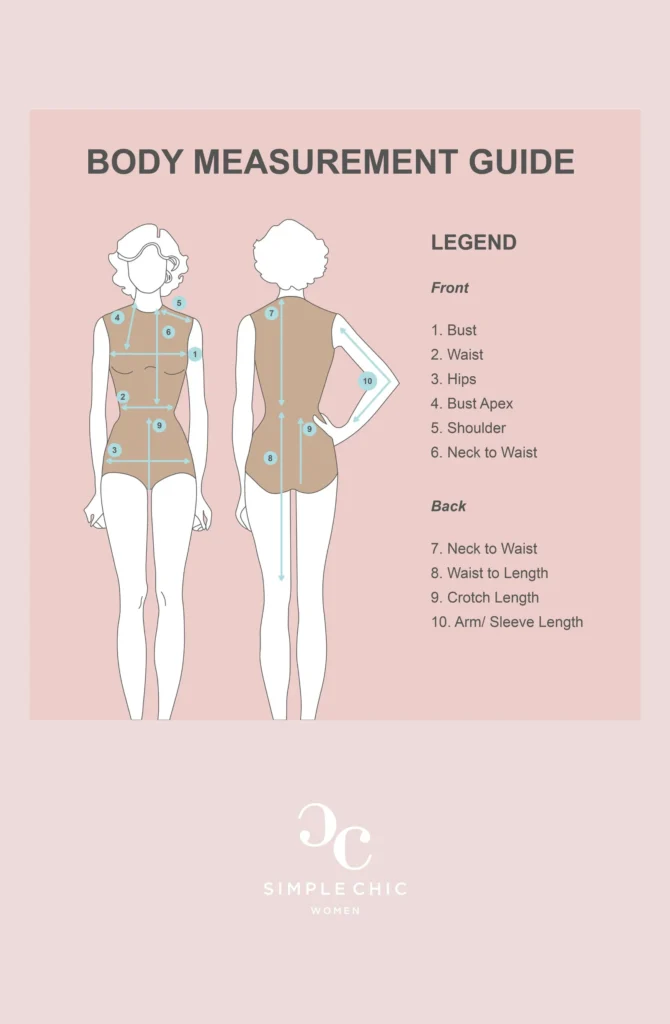
To identify body shape accurately, the first step is gathering four essential numbers. You don’t need professional tools — just a soft tape measure and a relaxed posture.
Shoulders
Wrap the tape around the broadest part of your shoulders. This measurement shows how your upper frame naturally balances with your hips.
Bust
Measure around the fullest part of your bust, keeping the tape level and comfortable.
Waist
Find your natural waistline — usually the narrowest point above your belly button — and measure here.
Hips
Measure the widest part of your hips and bottom area.
These four numbers will guide you to recognise your silhouette more precisely.
Step 2: Use Visual Observation Alongside Measurements
Numbers tell one part of the story, but mirrors reveal the rest. To identify body shape with complete accuracy, combine measurement comparison with a visual check. Stand straight, relax your shoulders, and look at the outline of your frame.
Ask yourself:
- Do my shoulders appear broader than my hips?
- Does my lower half look fuller than my upper half?
- Is my waist sharply defined or softly curved?
- Do I look more balanced or more top- or bottom-heavy?
This visual moment helps confirm whether your measurements translate into a clear body shape pattern.
The Five Main Female Body Shapes (Easy Identification Guide)
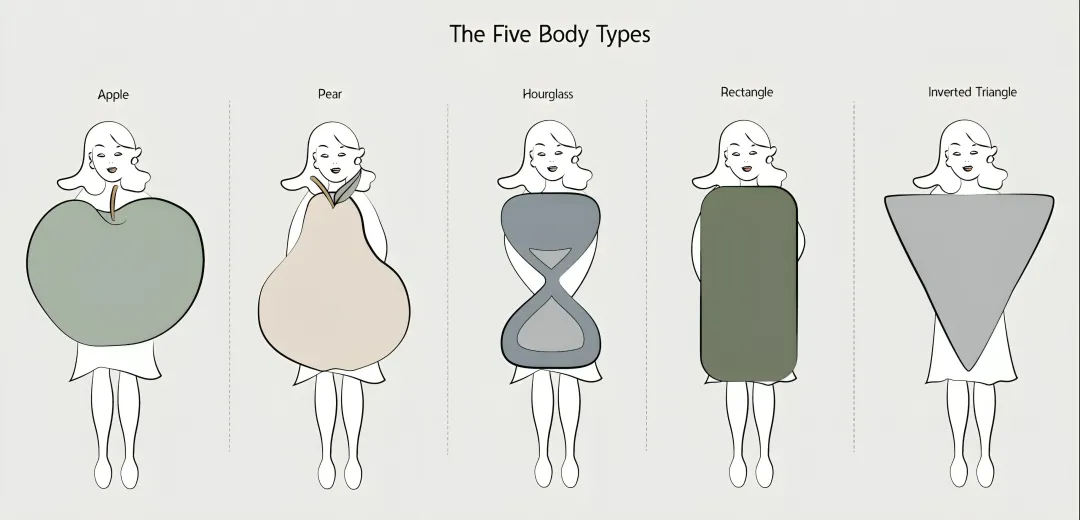
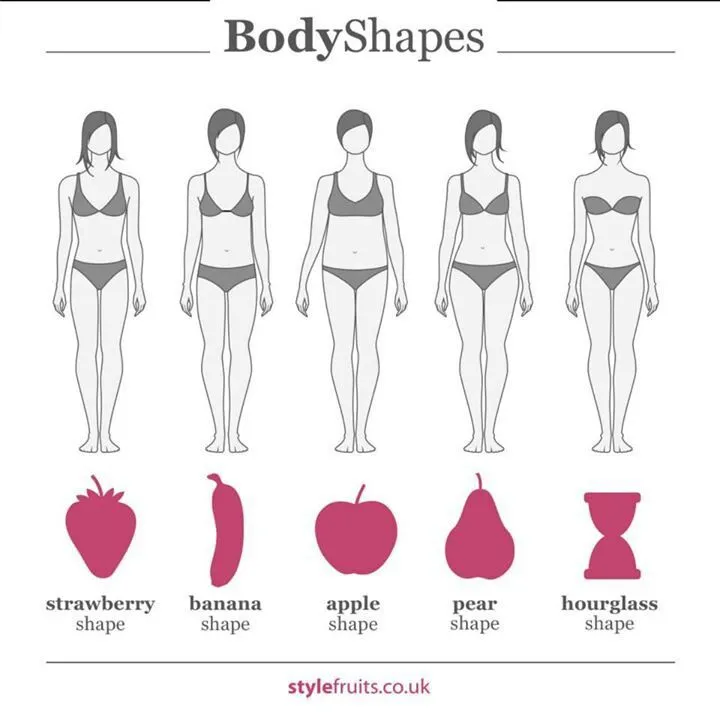
Every woman falls into one of these primary shapes or a blend of two. Below is a refined breakdown to help you identify body shape without confusion.
Hourglass Shape
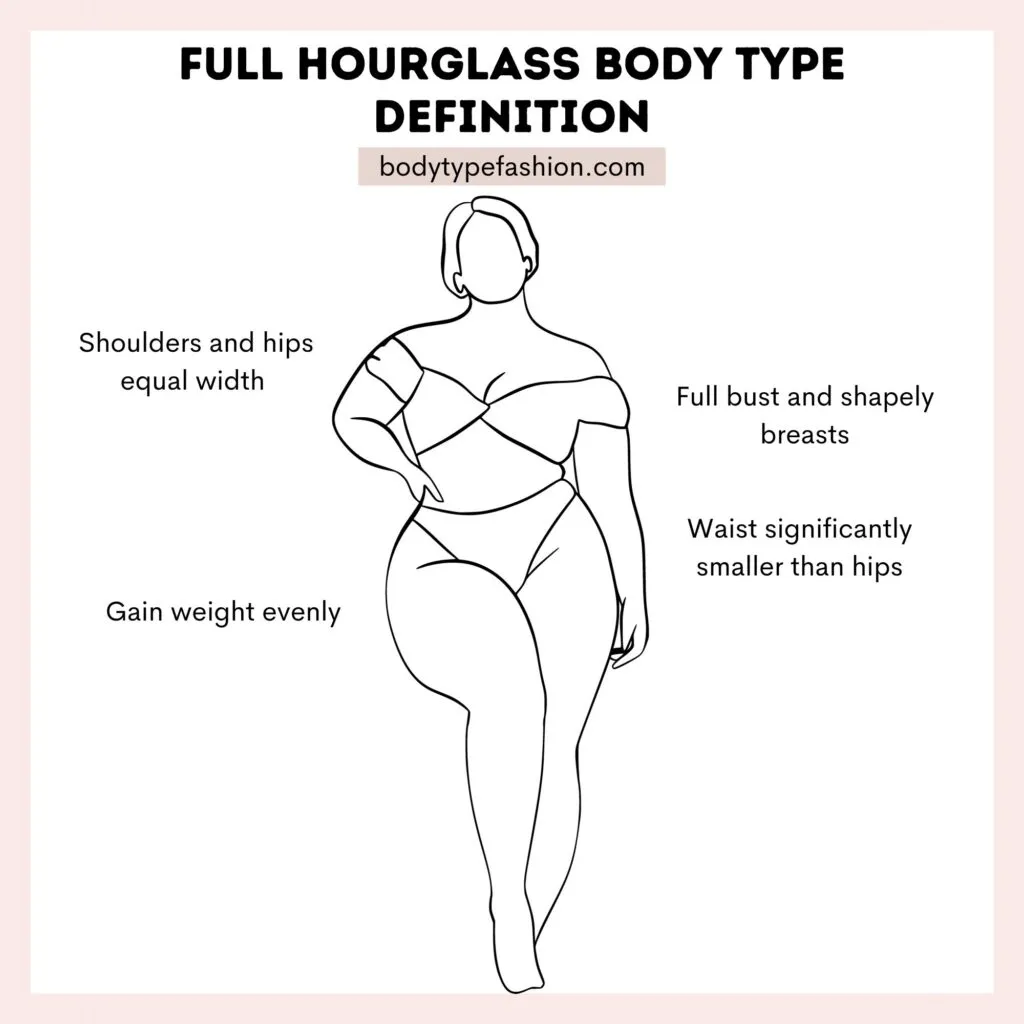
The hourglass shape is naturally balanced, with upper and lower proportions almost equal and a clearly defined waist. Women with this silhouette often appear curvy, even without added volume.
You likely have an hourglass shape if:
- Shoulders and hips are nearly the same width
- Waist is noticeably smaller
- Curves appear evenly distributed
Pear (Triangle) Shape
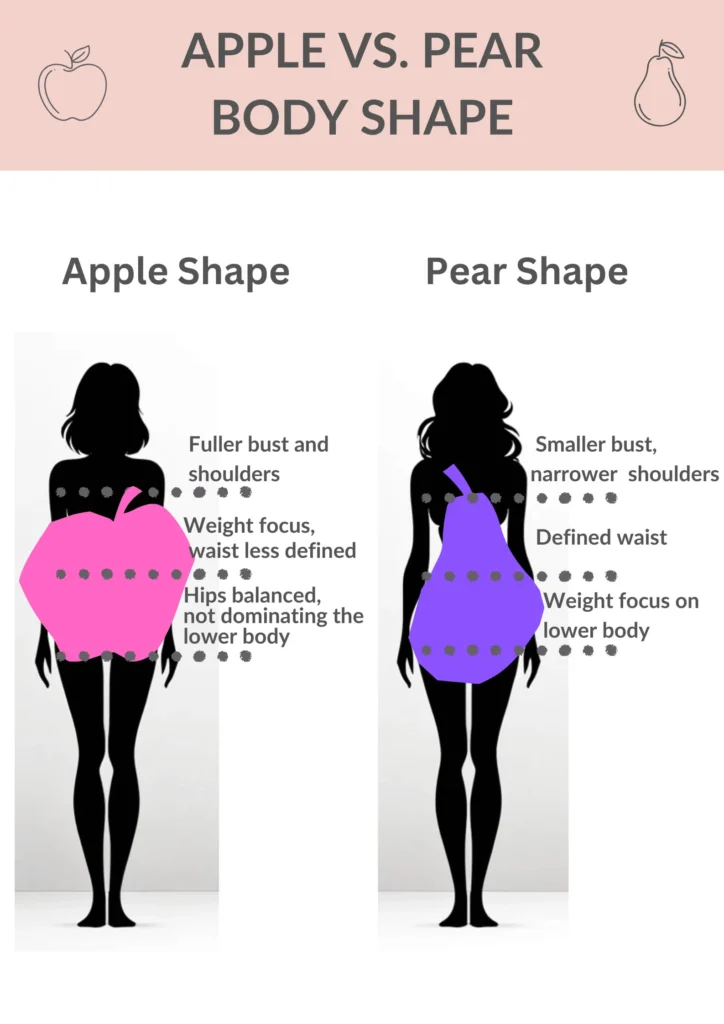
The pear shape carries more fullness in the lower half. Hips are the widest point, giving the silhouette a naturally grounded appearance.
You likely have a pear shape if:
- Hips are wider than shoulders
- The waist is defined
Weight gathers more around hips and thighs.
Apple (Round) Shape
The apple shape has a softer, fuller midsection with broader bust proportions and less definition at the waist.
You likely have an apple shape if:
- Waist is the least defined area
- The upper body appears fuller
Shoulders are broader or equal to hips.
Rectangle (Straight) Shape
The rectangle silhouette has little difference between shoulders, waist, and hips. The frame appears straight, balanced, and athletic.
You likely have a rectangle shape if:
- Shoulders, waist, and hips have similar measurements
- Waist definition is minimal
- Your frame looks straight from top to bottom.
Inverted Triangle Shape - This shape features broader shoulders compared to the hips, giving the frame a strong upper presence.
- You likely have an inverted triangle shape if:
- Shoulders wider than hips
- Waist appears straighter
- Upper body looks more dominant
Step 3: Compare Measurements With Shape Patterns
Now that you understand each silhouette, match your numbers to the typical ranges:
- Hourglass: shoulders ≈ hips, waist clearly smaller
- Pear: hips are the widest measurement
- Apple: waist is the largest or least defined
- Rectangle: all measurements similar
- Inverted Triangle: shoulders the widest
If you don’t fall perfectly into one category — that’s normal. Many women carry a hybrid shape, such as pear-hourglass or rectangle-inverted triangle.
Step 4: Use Measurement Ratios to Confirm Your Shap
For those who prefer precision, these quick ratio checks help you confidently identify body shape:
- Shoulder vs. Hip Difference
- Waist vs. Bust Difference
- Waist vs. Hip Curve
- Upper-to-Lower Proportion Balance
These ratio checks are especially helpful if your silhouette feels visually “in between” two shapes.
Step 5: Photo-Based Shape Checking (Optional but Helpful)
Some women find it easier to identify body shape through a photo rather than a mirror. A straight, well-lit, front-facing picture highlights natural lines without posture shifts.
This method works well if:
- You struggle to see your silhouette clearly
- You want an objective comparison
- You’re checking proportions for styling or outfit planning
Online tools can estimate shape from photos, but your own visual understanding is always more reliable.
Final Thoughts
Identifying your body shape is about understanding your natural proportions, not fitting into a rigid category. When you recognise your silhouette, your style choices become more intentional, balanced, and reflective of your personality. Whether your frame is softly rounded, elegantly straight, or beautifully curvy, learning to identify body shape gives you the confidence to dress with purpose every day.
FAQs: Identify Body Shape
1. How do I quickly identify my body shape?
You can identify your body shape by comparing the width of your shoulders, bust, waist and hips. Once you know which areas are wider or narrower, you can match your proportions to the most common shapes: hourglass, pear, apple, rectangle or inverted triangle.
2. Is body shape based on weight or size?
No. Body shape depends on proportions, not weight. Two women with the same weight can have completely different shapes, because shape is determined by how your shoulders, waist and hips relate to one another.
3. Can my body shape change over time?
Yes, body shape can shift due to weight changes, age, hormonal changes, pregnancy or lifestyle. Your silhouette may become softer, straighter or curvier, but your core proportions usually stay similar.
4. What if I don’t fit perfectly into one body shape?
That’s completely normal. Many women fall between two shapes, such as pear–hourglass or rectangle–inverted triangle. Identifying the closest match helps you style your proportions confidently, even if you’re a hybrid shape.
5. Do I need exact measurements to identify my body shape?
Exact measurements help, but they aren’t necessary. A mirror check often gives a clear idea of your silhouette. Measurements simply confirm what you already see.
6. Can I identify my body shape using a photo?
Yes. A straight, front-facing photo can be very helpful. It removes posture bias and gives a cleaner view of your natural outline. Many women find this method easier than using a mirror alone.
7. Which body shape is the most common?
Pear and rectangle shapes tend to be the most common among women. However, the “most common” shape varies across regions and ethnicities, so there’s no universal standard.
8. Is one body shape better than another?
No. All shapes are equally beautiful. The goal is not to rank them but to understand your proportions so you can choose clothes that flatter your natural silhouette.
9. What’s the difference between body shape and body type (ectomorph, endomorph, mesomorph)?
Body shape refers to your outline—shoulders, waist and hips.
Body type refers to how your body tends to build muscle or store fat. They are completely separate systems and shouldn’t be confused.
10. How often should I recheck my body shape?
Every 1–2 years is enough, unless you’ve experienced major changes such as pregnancy, weight fluctuations, or hormonal shifts. A quick recheck ensures your styling choices still match your proportions.