
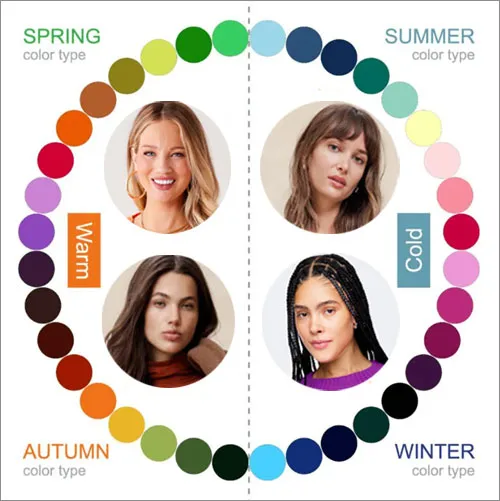
Seasonal Color: A Modern Guide to Understanding Your Most Flattering Shades
The concept of Seasonal Color has moved far beyond its 1980s origins and become an essential styling tool for women who want wardrobes that flatter effortlessly. While silhouettes and trends evolve, colour remains the most immediate visual cue — and knowing which shades harmonise with your undertone, depth, and contrast can genuinely transform your style. Today’s Seasonal Colour systems are more nuanced, research-driven, and fashion-relevant than ever, combining colour theory with real-world wearability.
Whether you’ve taken the seasonal colour analysis test, tried an online quiz, analysed your features on the seasonal colour wheel, or simply wondered “What is my seasonal colour palette?”, this guide breaks down the modern approach in an elegant, editorial way. You’ll learn how to identify your colour direction, how Seasonal Colour interacts with makeup, jewellery, hair choices, and how designers are interpreting these palettes for today’s wardrobe.
From the luminous clarity of a Bright Spring to the deep sophistication of a Dark Winter, Seasonal Colour analysis remains one of fashion’s most powerful pillars — a tool that doesn’t limit your style, but elevates it.
Table of Contents
- What Seasonal Color Analysis Really Means
- The Seasonal Color Wheel Explained
- How to Determine Your Seasonal Colour Palette
- The Four Seasons + Twelve Extended Types
- Makeup, Hair, and Jewellery Within Seasonal Theory
- Why Seasonal Color Still Matters in Modern Fashion
- Conclusion
- FAQs
What Seasonal Colour Analysis Really Means
Seasonal Color analysis is the practice of identifying which colours naturally enhance your complexion, eyes, and hair. The method categorises people into seasonal groups — Spring, Summer, Autumn, and Winter — each with specific harmonies. Instead of choosing shades at random, you choose colours that mirror your skin’s undertone, chroma, and value.
This isn’t about restricting your wardrobe; it’s about choosing colours that feel alive on you. A well-matched Seasonal Color palette brightens the face, reduces shadows, brings out the natural glow, and creates effortless coordination in clothing, draping, and makeup.
While some ask if seasonal color analysis is accurate or if the seasonal color analysis trend on Reddit is reliable, the system remains one of the most stable and respected ways to understand colour harmony.
The Seasonal Colour Wheel Explained
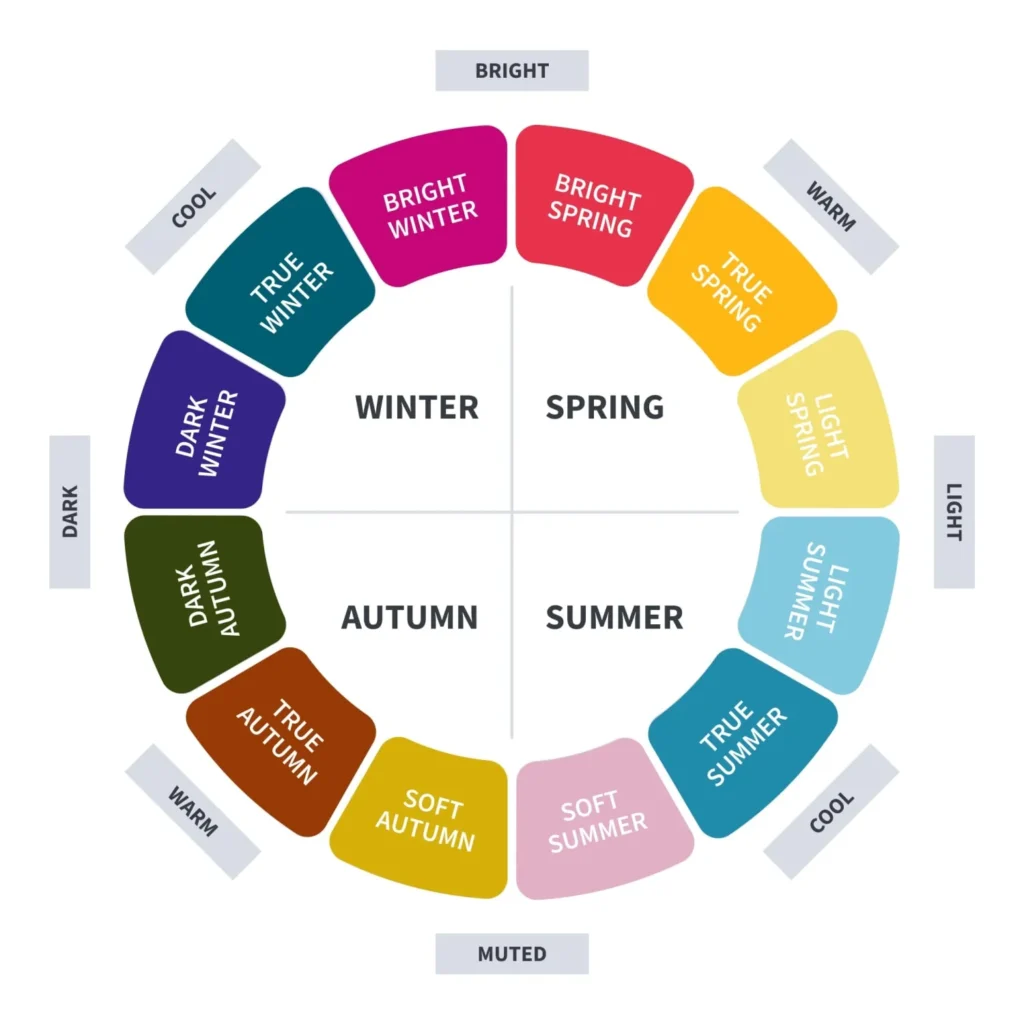
To understand your Seasonal Color category, the Seasonal Color wheel is the foundational tool. It maps undertone (warm or cool), depth (light or dark), and saturation (bright or muted). Each season combines these traits into a distinct palette:
Spring
Warm, bright, fresh tones.
- Peach, warm corals, golden yellows, clear aqua.
- Best for high-energy complexions with warm undertones.
Summer
Cool, soft, powdery hues.
- Dusty rose, periwinkle, lavender, misty blue.
- Works beautifully with cool, low-contrast complexions.
Autumn
Warm, rich, earthy colours.
- Olive, rust, mustard, pine green, chestnut.
- Ideal for warm, deeper, golden-olive features.
Winter
Cool, deep, dramatic shades.
- Blue-red, emerald, icy pastels, black, stark white.
- Best for strong contrast between hair, skin, and eyes.
The seasonal colour wheel isn’t about forcing trends; it’s about understanding the internal logic of your colouring.
How to Determine Your Seasonal Colour Palette
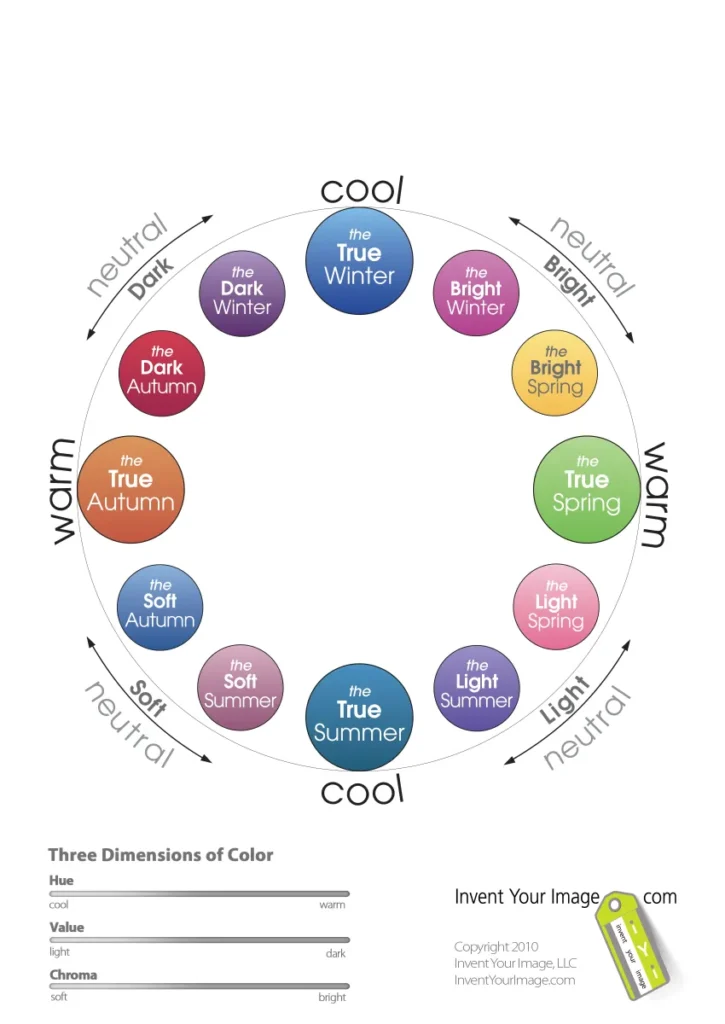
Finding your Seasonal Colour palette involves evaluating three pillars:
1. Undertone
Warm, cool, or neutral.
- Warm skin harmonises with golden, earthy, peach-toned palettes.
Cool skin looks better in blue-based, icy, or muted shades.
Neutral undertones may lean toward either season depending on depth.
2. Depth
Light, medium, or deep.
- Lighter complexions fit Spring or Summer.
- Deeper complexions align with Autumn or Winter.
3. Chroma (Clarity vs. Softness)
- High chroma = bright and clear shades.
- Low chroma = soft, muted tones.
This is why a Bright Spring and a Soft Autumn can both be warm — yet look entirely different in colour harmony.
Seasonal quizzes, draping tests, and professional consultations remain the best tools, though many now explore seasonal colour analysis upload-photo tools online. These aren’t perfect, but they help narrow your starting point.
The Four Seasons + Twelve Extended Types
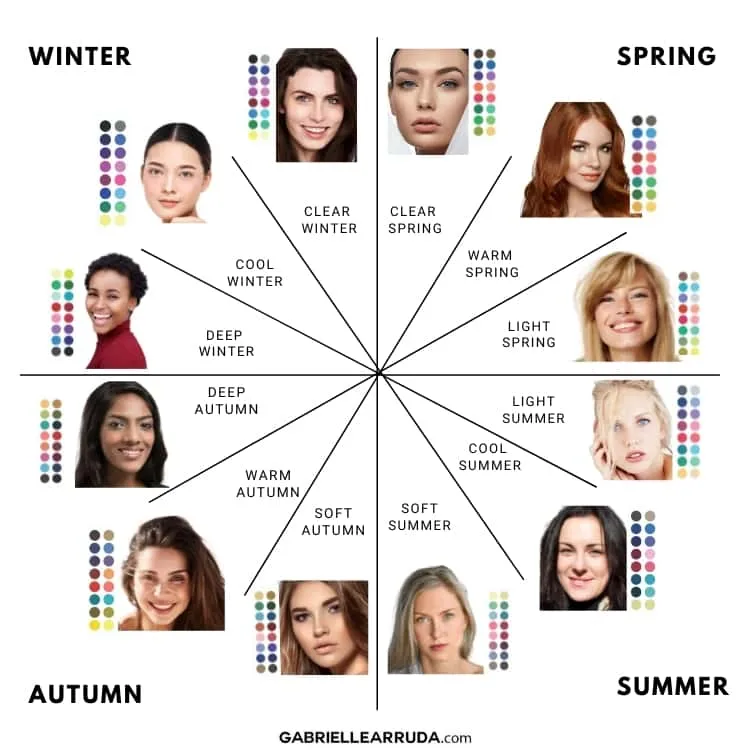
To refine Seasonal Colour theory, modern experts expanded the original four seasons into twelve nuanced categories.
Spring Family
- Light Spring: gentle, luminous, warm.
- Warm Spring: golden, lively, peachy.
- Bright Spring: clear, high-chroma, vibrant.
Summer Family
- Light Summer: delicate, cool, airy.
- Soft Summer: muted, calm, powdery.
- Cool Summer: cool, balanced, refined.
Autumn Family
- Soft Autumn: warm, gentle, natural.
- Warm Autumn: rich, golden, earthy.
- Deep Autumn: bold, warm, dramatic.
Winter Family
- Cool Winter: icy, crisp, cool.
- Bright Winter: clear, vivid, high contrast.
- Deep Winter: dark, strong, commanding.
These categories make Seasonal Colour analysis more precise and wearable.
Makeup, Hair, and Jewellery Within Seasonal Colour Theory
Makeup
Each Seasonal Colour group has recommended tones:
- Springs glow in peachy blushes and warm corals.
- Summers shine in soft rose, cool taupe, and mauve.
- Autumns thrive in terracotta, copper, and bronze.
- Winters dominate in blue-reds, deep berries, and icy highlights.
Hair Colour
Choosing shades aligned with your Seasonal Colour keeps your features balanced.
A Winter looks best in blue-black or cool espresso; a Spring suits honey blonde or warm caramel.
Jewellery
- Gold harmonises with Spring and Autumn.
- Silver flatters Summer and Winter.
- Rose gold works beautifully for neutral undertones.
Why Seasonal Colour Still Matters in Modern Fashion
Seasonal Colour remains relevant because it simplifies and elevates your wardrobe. Instead of endlessly experimenting, you curate pieces that flatter instantly. Many women describe Seasonal Colour analysis as a wardrobe “unlock” — clothing suddenly looks more expensive, makeup more intentional, and outfits more cohesive.
Seasonal Colour is trending again across TikTok, Reddit’s r/seasonalcoloranalysis, Korean beauty content, and celebrity breakdowns (like Jennie or Zendaya Seasonal Colour analysis). This renewed popularity is driven by a desire for customisation, personal branding, and sustainable shopping.
The method also pairs beautifully with capsule wardrobes, minimalist dressing, and the modern push for intentional style — proving once again that Seasonal Colour is both timeless and fashion-forward.
Conclusion
Understanding Seasonal Colour is one of the most transformative ways to refine your style. It clarifies which shades illuminate your complexion, which tones echo your natural features, and how to build a harmonious wardrobe. Seasonal Colour isn’t about rules; it’s about recognising the colours that let you shine. When you dress in alignment with your palette, your skin looks fresher, your eyes brighter, and your overall style more elevated — without extra effort.
Seasonal Colour remains one of the most elegant tools in fashion: simple, insightful, and endlessly empowering.
FAQs About Seasonal Colour
1. What is Seasonal Colour analysis?
It’s a colour-harmony system that groups individuals into seasonal palettes based on undertone, depth, and chroma.
2. How do I find my Seasonal Colour palette?
Evaluate your undertone, test drapes, compare seasonal colour charts, or take a professional analysis or online quiz.
3. Is Seasonal Colour analysis accurate?
Yes — when done correctly, it is highly effective and visually obvious. DIY quizzes vary, but professional draping is extremely reliable.
4. Can my Seasonal Colour change?
Your core undertone doesn’t change, but hair dye, ageing, and tanning can influence how certain shades appear.
5. Which season looks best in bright colours?
Bright Spring and Bright Winter suit the highest-chroma, most vivid shades.
6. Do men also have Seasonal Colour palettes?
Absolutely — Seasonal Colour analysis applies to men, women, and non-binary individuals equally.